
Nightshine

Malok skinned several squirrels in the afternoon and then walked toward the water to clean his hands and knives. At the sight of matted hair floating just upstream, he splashed in loudly. There were shouts from places behind him. More and more voices. On his swim toward the dark tangles, he encountered a foot and then a baby.
On the shore, everyone had gathered. Some mothers were guiding tearful children back to their homes, callused hands covering their eyes. Malok left the hair alone and swam back, stepping out of water that had become slick and sour with blood. It made a pink foam on the sand around his feet. He turned to see that the sacred river, beside whom he had lived all his years, was now a canyon of severed heads, bloated corpses, ragged pieces of flesh. Some even aflame, their clothing melting into them.
Not all of those who floated by were dead. Some called out in the language of the doomed. Malok’s uncle came down from his house with two bows and a large quiver of arrows. He handed a bow to his nephew.
The older man took a brief aim, then released with a mournful breath. The arrow arched up and fell with an accuracy that seemed to contain its own intelligence. A single voice departed the chorus of agony.
“Our arrows,” Malok said.
“We will make more arrows.” His uncle sampled the wind with the back of his hand, adjusted minutely, then loosed another gift.
“We may need them,” Malok said. “If we face what they faced.”
His uncle looked out over the dead and dying. He returned the third arrow to the quiver and walked back up the beach.
•
“They are asleep now,” Olma said. “What will we do?”
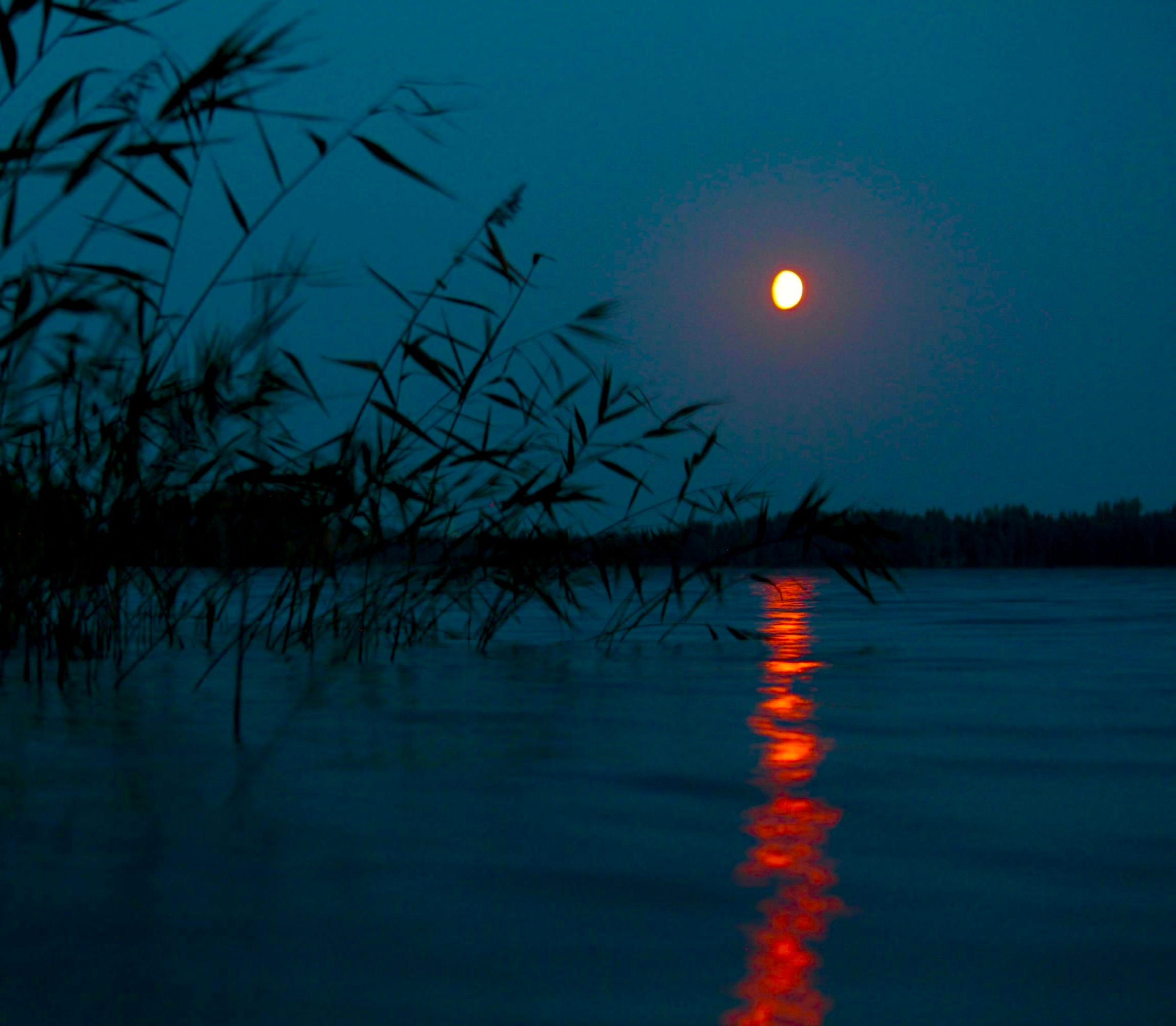
He sat beside her in the sand. The shameless moon spilled its light over the river where the remains of distant upstream strangers continued to move sluggishly, bumping and turning along the banks, catching in great clots that accumulated until breaking off like rotting icebergs.
“A scouting party will need to travel up the river to find the source.”
“I want to go,” she said.
“No one knows what we will find. You are needed here.”
“I will go.”
•
The small group moved swiftly along the familiar paths that wound in and out of the woods at the river’s edge. Rom and Kavi led the way, occasionally hacking at the growth, longbows slung over their shoulders. Malok breathed heavily, weighed by the sack of supplies and the quivers. Beside him, Olma stepped with lithe alertness, scanning the trees, eyeing their backtrail.
Late in the second day, their progress slowed. Paths narrowed and then vanished. They encountered fields of black mud that sucked at their legs, making every step like a hundred. They passed along cliffs, shuffling on ledges no wider than a palm.
And all the way, the hands and rib cages, the charred skulls and the swirls of hair, continued to float steadily by, the dark waters hidden below. Carrion birds fell from the sky like locusts. Rats ran from one bank to the other across the morbid bridge, stealing morsels as they went. The flies sung a maddening tune.
On the fourth day of their journey, Malok recognized that the pieces of flesh in the river appeared to be less ravaged by predators and the elements. The blood that covered everything was a livelier shade of red.
The men out in front walked with arrows fitted to their bowstrings.
It was another day and night covering treacherous riverland before they began to hear the noises. Low, rhythmic chuggings were the first sounds detectible. The screeching whistle, angry and constant later joined the discordant harmony.
The next day, Olma crested a rise in the land and saw before any of them what lay in the distance. She dropped to her knees, crouching low to the dirt and roots.
Malok went to her while Kavi and Rom crept into the woods off either side of the trail to look for themselves.
“What is it,” Malok asked.
“Something that I have no name for,” she said. The muscles of her back spasmed beneath her damp skin.
•
Shoulder to shoulder, they lay flat and still upon an overhang that gave them cover and a clear view of the shallow valley unfolding below them.
Most of the land around the river’s bend was frosted with lush greens and yellows and whites, cascading ivyfalls, rainbows of petals and leaves. But life ended at the swath of land along the bank that had been hacked, crushed, and burned away for the building of The Plant.
An enormous, bristling tick stood at the river’s edge, sides of rusted plate, bolts and rivets rattling in mazes of metal. A towering castle of pipes, flumes, stacks, chimneys, all belching clouds of greasy smoke. Dirt roads, pounded flat by thousands of feet, fanned out away from the monstrosity and off into distant lands. Every road was lined with people who were being herded along to the place where all paths converged.
The dark mouth of The Plant.
There appeared to be no way of approaching the place with stealth. After little debate, they decided to turn back and report what they’d seen to the others. Within a half day’s travel, they were captured. The men were beaten and bound.
For Olma, it was worse.
At one point, as they neared the metal tumor that had grown on their river, Malok was separated from Olma and never saw her again.
•
“We need ye cricoid,” the man said as he touched two fingers to a place under his chin.
“I told ya ‘fore, they cain’t reckon a word yer sayin,” the man’s colleague said.
Malok blinked with confusion.
“The cricoid cartilage. It’s here in yer thote. Up in the refinery, they grind ‘em down and throw in some chemicals and turn it into a sparkle powder that ALL them ladies—”
“And some of the gents,” his colleague interjected.
“And some of them gents, like to dust on they cheekbones and noses. It’s all the rage in the city.”
“De rigueur,” added the other man.
“Yup. Nightshine they call it.”
“Nightshine.”
“That stuff,” the man confided, “is makin’ a lot of people a lot of money. Lemme tell ya.”
A buzzer sounded and the flashing yellow lights turned green. The man and his colleague shouted some commands and guided Kavi and Rom through the gates, along with many others. Before Malok could reach them, another horn droned and the gates snapped shut. He watched them walk down sorting chutes to the cold metal seats at the end. The row of seats stretched for as far as Malok could see, each filled with the next person in line.
A man in a booth pressed a button and steel pinchers extended around their necks. They tightened firmly and lifted, stretching the head up from the body. Some form of hidden blade sprung forth, severed every throat simultaneously, then retracted in a flash.
The heads were flung back into a gutter where a conveyer belt carried them away. Held suspended by the pinchers, the neck holes in each torso were plundered by a razor-clawed scoop designed for accurate and efficient removal of the cricoid cartilage. Finally, the bodies were dropped through trapdoors where they encountered a series of immense spinning blades before rejoining the heads to be ejected from waste drains into the river.
Though his size had always commended him for glory as a warrior, Malok had no fire for it. He fought when needed, but had never killed. Still, he knew the truth of life. That it held many trials. In countless moments, alone on night watch or daydreaming in his bed, he had envisioned the test. What form it might take in his life. How it would someday try his steel.
If he would meet it as a man.
Now, in this iron hell, it was like asking how water might fair against a sword.
Faced with helpless absurdity, his thoughts lost all meaning. He vomited laughter as buzzers buzzed and lights flashed and his legs somehow carried him down the chute to the vacated metal chair.
Those cackling sounds continued to erupt from his lungs, up through his cricoid cartilage, ringing against the walls of the slaughterhouse until his breath met the blade.
•
Olma awoke in a pocket of tree roots. In a wild bid for escape, she and her captor had fallen from a cliff just outside The Plant. Despite her counterpart’s body laying broken on the rocks below, no guards came searching for either of them.
She knew that her men were gone. That Malok was gone.
Rain threatened as evening turned toward night. She moved up against the slimy walls of the place and made her way along the waste drains to the river’s edge. The sound of mighty engines and splashing body parts were like needles in her ears.
By dark, Olma lay on her back, a raft of the dead beneath her. The awful cacophony slowly faded into the calming sounds of the land. She watched the swirling stars and tried to remember their names. Her ancestors. She told herself their old stories of vengeance.
Under a skyscape written with those histories, she was carried back to the banks of her home where she would sharpen her knives and go forth once more up that bloody river to find her place among the constellations.
•
Those tactile/grounding details are really working again. Appreciate such a grim story ending with a note of hope. I had to look up cricoid cartilage; I thought you made it up!
a metaphor if ever there was one. very grim!